French Drains
We dig the trench, lay perforated pipe in clean stone wrapped in filter fabric, and slope the whole run to a real outlet so water leaves instead of sitting. No more soggy lawn, no more wet basement after a hard rain.
Wet Yards & Wet Basements
Most drainage problems in this area are not a mystery. Water lands somewhere, has no lower place to go, and stays. A french drain gives it a path. The catch is that the path has to end somewhere lower than where it starts, or the drain just fills and stops working.
Murray General Contracting installs french drains and foundation drains across the Lehigh Valley, from Allentown and Bethlehem to Easton and out around Breinigsville. We read your grade first, find where the water is coming from and where it can safely go, then dig a sloped trench, set perforated pipe in washed stone, and wrap it in filter fabric so soil does not clog the line. The run pitches to a daylight outlet, a pop-up emitter, or a dry well, depending on your lot.
You get one local crew from the first walkthrough to backfill, and a free estimate within 48 hours of sending us the details.
How We Build A French Drain
We walk the wet spot, the high ground feeding it, and the low ground around it. The drain only works if we have somewhere lower to send the water, so we plan the outlet first.
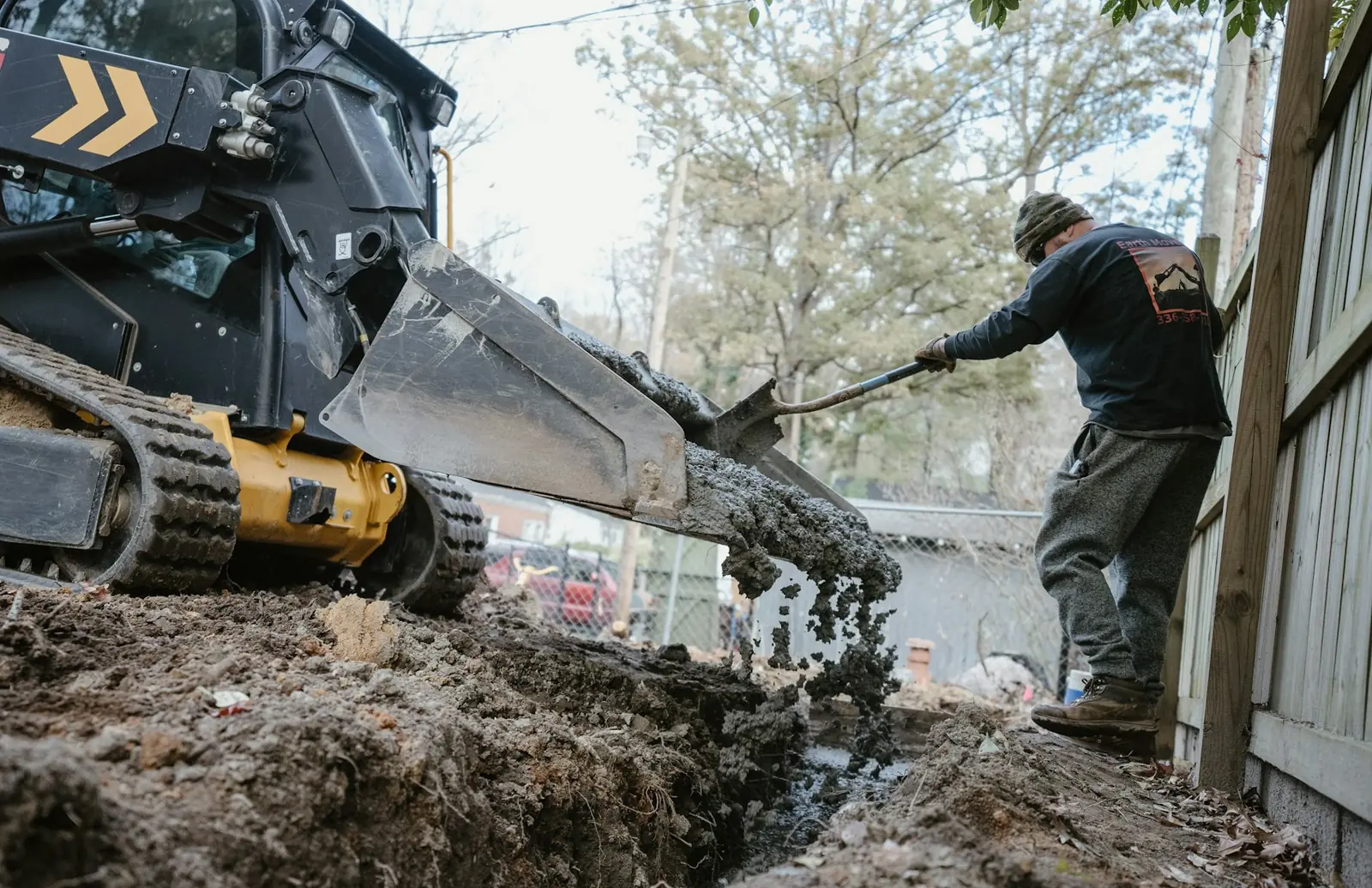
We trench the line and set a steady downhill pitch the whole way. A flat trench holds water. A pitched trench moves it. This is where most failed drains go wrong.
We line the trench with filter fabric, bed the perforated pipe in washed stone, and fold the fabric over the top. The fabric keeps silt out so the pipe stays open for years.
We connect downspouts in solid pipe, then carry the line to a daylight outlet, a pop-up emitter, or a dry well so the collected water leaves the property cleanly.
We backfill, reset the grade so surface water heads the right way, and leave the lawn ready to recover. Then we walk the finished run with you.
Why It Keeps Working
The water has to go somewhere lower. We set the daylight, pop-up, or dry well before we dig, so the drain has somewhere to empty instead of backing up.
Every foot of pipe pitches downhill. A drain that runs flat holds water and breeds the same wet spot you started with. We grade the trench, not just the lawn.
Filter fabric wraps the stone and pipe so dirt cannot wash in and clog the perforations. That is the difference between a drain that lasts and one that silts shut in a season.
We run downspouts in solid pipe, separate from the perforated section, so a hard rain off the roof does not flood the drain meant to catch groundwater.
Drainage Work We Do
Sometimes the real fix is the slope, not a buried pipe. See our yard drainage and grading, and remember every drain starts with the trenching and excavation we handle in house. Already have pipes that are clogged? We can clear them with sewer jetting and drain cleaning.
Did a fantastic job. Fast. Trustworthy. Honest. On time. Everything you want in a contractor.Jeffrey Ulle, Google review
French Drain Questions
A french drain is a gravel-filled trench with a perforated pipe at the bottom and filter fabric around it. Water in the soil seeps into the gravel, drops into the pipe through the holes, and the pipe carries it downhill to an outlet. The whole run is sloped so gravity does the work. No pump is needed when there is somewhere lower to send the water.
It has to go somewhere lower than the trench. We daylight the pipe onto a slope, into a swale, or to a pop-up emitter out in the yard. If there is no good gravity outlet, we tie it into a dry well or a sump that pumps it out. A drain with no real outlet just fills up and quits, so we plan the discharge before we dig.
Often yes, when the water is coming through or under the foundation. An exterior perimeter drain at the footing catches groundwater before it reaches the wall and routes it away. We pair it with regraded soil and downspout tie-ins so surface water is not feeding the problem. We will look at where the water shows up and tell you honestly whether a drain is the right fix.
They are built the same way, with gravel, perforated pipe, and fabric. The difference is the job. A curtain drain is placed uphill of a wet spot to intercept water moving down the slope before it ever reaches your yard or foundation. A standard french drain collects water that is already pooling where you stand.
It depends on the job. A yard drain handling surface water can be fairly shallow, while a foundation drain follows the footing and sits much deeper. Where a pipe needs to stay clear of freezing, we set the run and the outlet with our Lehigh Valley freeze-thaw winters in mind. We size and set the depth for your grade, not a one-size number.
Yes. Roof water is often the biggest source of a soggy yard, so we tie downspouts into solid pipe and carry that flow out to the same outlet. Keeping roof runoff in its own solid line, separate from the perforated section, stops the gutters from flooding the drain during a hard rain.
Keep Exploring
Free estimates on french drains, foundation drains, and downspout tie-ins across the Lehigh Valley and Eastern Pennsylvania.