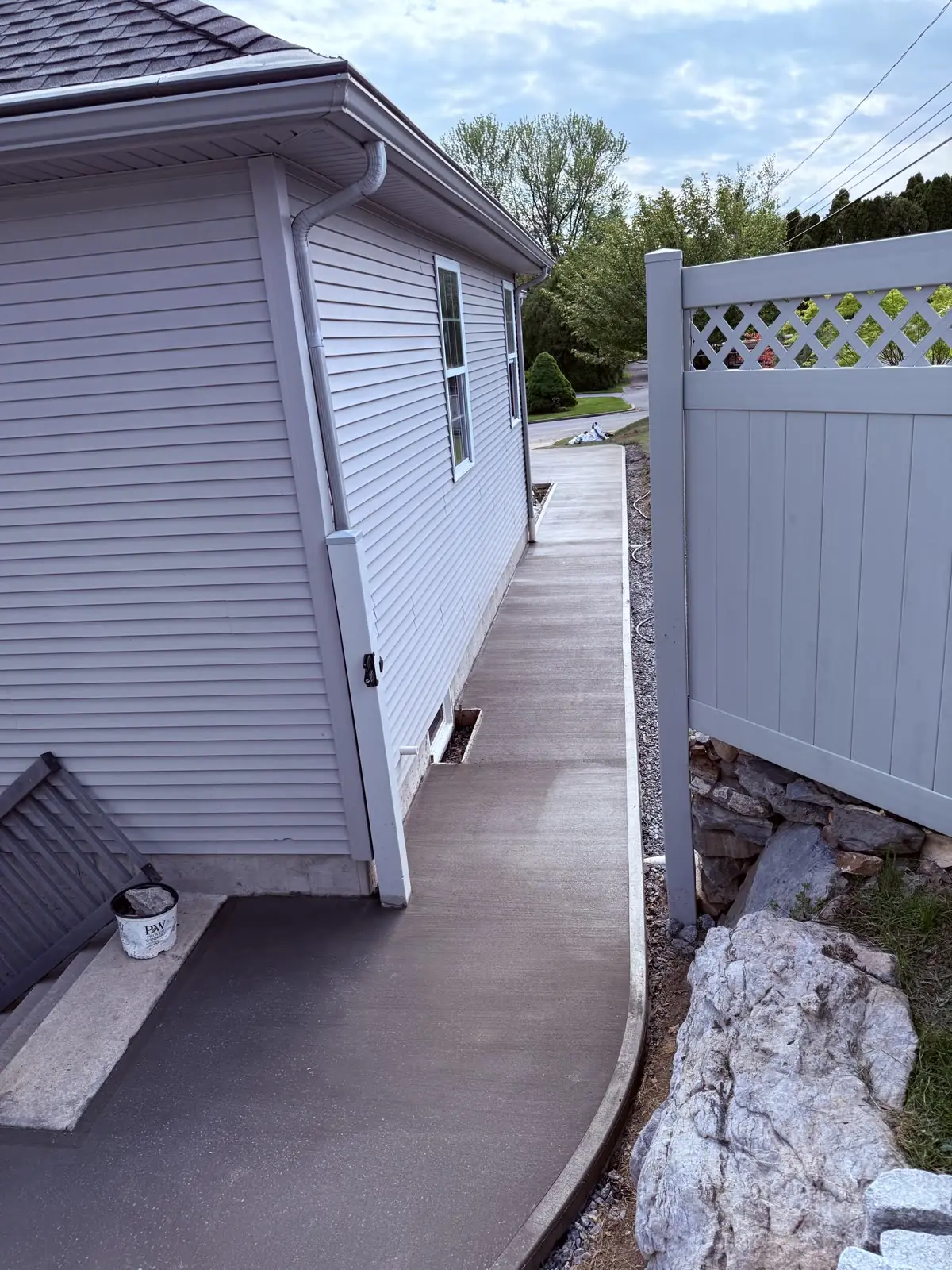
Concrete walkway and stone retaining wall built by Murray General Contracting in the Lehigh Valley

Retaining Walls

Retaining walls that hold the grade and push water away from it.

We build concrete retaining walls across the Lehigh Valley on a real footer, drained behind the face and backfilled right, so a slope stays put and water has somewhere to go besides into the wall.
Footer & Wall Systems

A good wall is the footer and the drainage, not the face.

When a retaining wall leans, cracks, or bows out, the problem is almost never the concrete you can see. It is the footer underneath, the water trapped behind the wall, or backfill that holds that water like a sponge.

Murray General Contracting builds concrete retaining walls across the Lehigh Valley, from Allentown and Bethlehem to Easton and out around Breinigsville. We dig the footer down to solid soil below the frost line, form and pour the wall to carry the load of the soil behind it, then set stone, a drain line, and free-draining backfill so groundwater never gets a chance to push the wall over.

You get one local crew from the first measurement to the final walkthrough, and a free estimate within 48 hours of sending us the slope and the details.

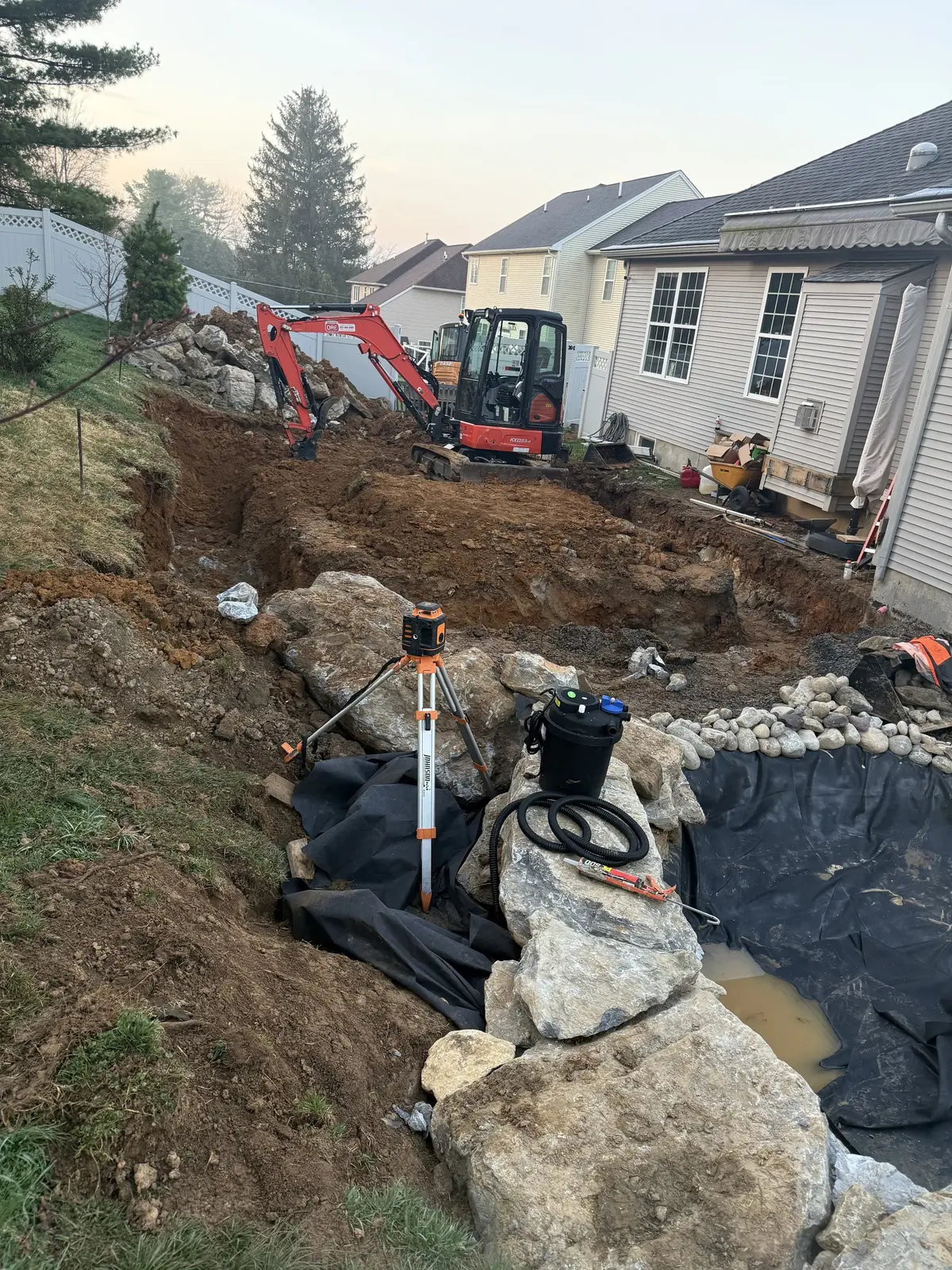
Footer and concrete wall system under construction on the Backyard Oasis project in the Lehigh Valley

How We Build A Wall

From the footer up to the backfill.

01

Read the slope

We look at how the grade falls, where water comes from, and how tall the wall needs to be. That tells us whether one wall or a terrace of shorter walls is the right call.

02

Dig the footer

We excavate down to solid, undisturbed soil below the frost line and form a footer wide enough to spread the load. Everything the wall does well starts here.

03

Form & pour the wall

Squared, braced forms set the line and the lean of the wall back into the hill. We add rebar so the concrete works as one piece against the soil pressure.

04

Drain the back

Crushed stone and a perforated drain pipe go in behind the wall so groundwater runs out the low end instead of building pressure against the concrete.

05

Backfill & grade

We backfill with free-draining stone, not packed clay, then shape the grade on top so surface water sheds away from the wall. Then we walk it with you.

Why It Holds

Built to take the load and shed the water.

A footer below frost

We set the footer roughly 36 to 42 inches down, below where the ground freezes, so winter heave never lifts the wall out of plumb.

Drainage behind it

Stone and a drain line give groundwater a way out. Water that cannot pool behind the wall cannot push it over.

Free-draining backfill

We backfill with stone instead of clay, so the soil behind the wall drains fast and stays light instead of swelling with every rain.

Reinforced concrete

Rebar through the footer and wall ties the whole system together so it works as one mass against the soil instead of cracking apart.

Retaining Wall Work We Do

From a single garden wall to a terraced hillside.

A wall rarely stands alone. We build the footer it stands on, tie it into a new patio or graded yard, and pour the flatwork it carries while the crew is already on site.

Did a fantastic job. Fast. Trustworthy. Honest. On time. Everything you want in a contractor.
Jeffrey Ulle, Google review

Retaining Wall Questions

What homeowners ask us.

A wall fails because of what you cannot see, not the face you can. It needs a footer set below the frost line, drainage behind it so water cannot build pressure, and free-draining backfill instead of packed clay. Get those three right and the wall holds for decades.

In the Lehigh Valley we set wall footers below the frost line, which runs roughly 36 to 42 inches deep. That keeps freeze-thaw from heaving the footer in winter and dropping the wall out of plumb. We dig to solid, undisturbed soil before we form anything.

Soil holds water, and water behind a wall pushes hard against it. We set crushed stone and a perforated drain pipe behind the wall so groundwater has somewhere to go before it loads the back of the concrete. Without that drainage even a thick wall can crack, bow, or lean.

Yes. A steep grade is often better held by two or three shorter walls stepped up the slope than one tall one. Terracing gives you usable flat ground at each level, eases the load on any single wall, and lets us tie in steps, a patio, or a walkway between tiers.

We do. On our Backyard Oasis project we built the footer and wall system that held an elevated patio slab, then tied in a curved walkway and a driveway extension around a pond. One crew pours the wall and the flatwork it carries, so the grades and joints line up.

It depends on the length, the height, and how much excavation the slope needs. A short garden wall can be a couple of days, while a tall footer-and-wall system with drainage takes longer. We measure the site, give you an honest timeline, and stick to it.

Keep Exploring

Related concrete services.

Send us the slope, get an estimate within 48 hours.

Free estimates on concrete retaining walls and footer systems across the Lehigh Valley and Eastern Pennsylvania.

9997 Ziegels Church Rd, Breinigsville, PA 18031 Jacob.murray.66@gmail.com Cell (512) 738-7494